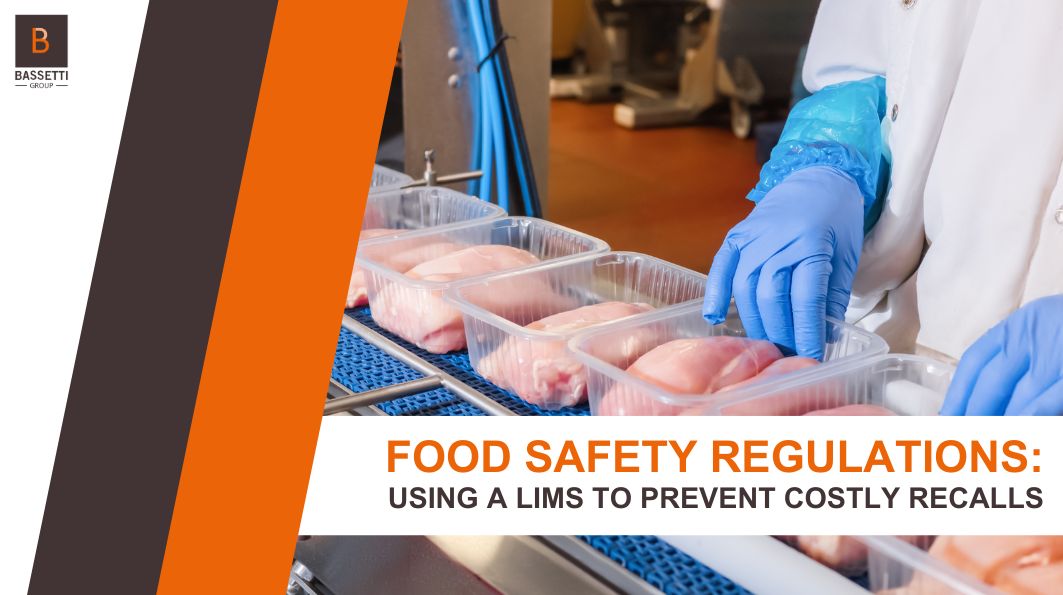
Food Safety Regulations: Using a LIMS to Prevent Costly Recalls
Increasing globalization is making food supply chains longer and more complex, which means ensuring food safety and quality is more critical than ever. From recalls to contamination scandals, the consequences of poor quality control can be severe, impacting not only consumers but also the financial health and reputation of businesses.
Global standards like ISO 22000, which integrate the principles of HACCP with a comprehensive food safety management system, are designed to harmonize regulations worldwide and ensure consistent, high-quality practices across borders. However, there are regional standards that countries must adhere to as well.
The European Union (EU) has earned its reputation as a global benchmark in its rigorous food safety regulations, which cover every stage of the supply chain. With strict policies around traceability, hygiene, labeling, and additives, EU regulators set a high standard that other regions, particularly North America, are still catching up to. While the U.S. Food and Drug Administration (FDA) and the Canadian Food Inspection Agency (CFIA) have made strides in tightening regulations, more can be done to adopt proactive, rather than reactive, food safety strategies.
In both markets, technology plays a critical role in ensuring compliance, and modern solutions like Laboratory Information Management Systems (LIMS) enable companies to meet ISO 22000 and other global standards while going beyond basic regulatory requirements. By providing a robust, integrated platform for managing laboratory data, these systems streamline compliance processes, enhance traceability, and significantly reduce the risk of costly recalls.

The EU’s Gold Standard for Food Regulations
The EU enforces some of the strictest food safety regulations in the world, covering traceability, hygiene, labeling, and additive control. Oversight comes from the European Food Safety Authority (EFSA), supported by an extensive legal framework.
The General Food Law (Regulation EC 178/2002) is the foundation of the EU’s food safety framework. It mandates that food must not be placed on the market if it is unsafe, and it establishes full traceability throughout the food chain. From sourcing and processing to labeling and distribution, every step is regulated.
Additional key regulations include:
- Regulation EC 852/2004 – Food hygiene requirements for all businesses.
- Regulation EU 1169/2011 – Rules on food information to consumers (labeling, allergens, nutrition).
- Regulation EC 1830/2003 – Traceability and labeling of genetically modified organisms (GMOs).
These laws demand meticulous documentation, rapid recall capability, and regular testing, practices that significantly reduce contamination incidents and increase consumer confidence. The laws are precise, enforceable, and monitored regularly, making the EU one of the safest food markets in the world. Violations can lead to severe penalties, bans on product sales, or forced recalls.
North America’s Catch-Up Game: A Need for Stricter Standards
While agencies like the U.S. Food and Drug Administration (FDA) and Canadian Food Inspection Agency (CFIA) enforce strong rules, North America has historically taken a more reactive stance toward food safety regulations. The U.S. Food Safety Modernization Act (FSMA) has introduced a stronger focus on prevention, but many companies still struggle with compliance, traceability, and real-time quality data management, especially across complex supply chains.
The consequences of gaps in compliance can be devastating. For example, in the 2015 Blue Bell Creameries listeria outbreak, after listeria was discovered in multiple products, the company was forced to issue a full recall and temporarily shut down operations. The scandal led to three deaths, major legal actions, and long-term damage to consumer trust. Blue Bell paid over $17.5 million in fines and damages—one of the largest penalties for a food safety case in U.S. history.
These are not isolated incidents. According to the Centers for Disease Control and Prevention (CDC), an estimated 48 million Americans get sick from food borne illnesses each year. Many of these cases are preventable with better systems for traceability, lab testing, and quality control.
Case Study on Maple Leaf Foods: The High Cost of a Recall
One of the most significant food safety incidents in North American history occurred in 2008, when Maple Leaf Foods, a major Canadian packaged meat producer, experienced a Listeria monocytogenes contamination that led to 20 deaths and at least 57 confirmed illnesses across Canada.
The outbreak was traced to a packaging machine at one of Maple Leaf’s plants in Toronto, where Listeria bacteria were found on surfaces that came into contact with ready-to-eat deli meats. Despite regular sanitation, the contamination went undetected for an extended period—partly due to fragmented data management, lack of centralized lab information systems, and delays in microbiological test reporting.
The impact on Maple Leaf Foods:
- A nationwide recall of over 200 products
- $20 million CAD in direct recall costs, destruction of inventory, and sanitation measures
- A sharp drop in stock value
- Long-term reputation damage and loss of consumer trust
- $27 million CAD in legal settlements with victims and families
- Increased regulatory scrutiny from the Canadian Food Inspection Agency (CFIA)
Following the crisis, Maple Leaf Foods invested heavily in food safety modernization, including the implementation of more rigorous testing procedures, enhanced traceability, and more integrated data management systems to monitor quality metrics in real-time.
This tragedy illustrates what can happen when manual systems and siloed data limit the visibility and response time of quality teams. Companies failing to fully integrate food traceability systems and quality control workflows can turn an isolated contamination into a full-blown crisis. Had a robust Laboratory Information Management System (LIMS) been in place, one capable of detecting microbial deviations, linking samples to production batches and issuing real-time alerts, the contamination might have been caught before it escalated into a full-blown public health disaster.
Why a LIMS is Essential for Food Safety Compliance
A Laboratory Information Management System (LIMS) is a digital platform that centralizes lab operations, making it easier to comply with food safety regulations. For food producers, a LIMS ensures:
- Full traceability from supplier to shelf.
- Automated workflows for HACCP, ISO 22000, and BRCGS compliance.
- Real-time test result tracking to detect quality issues early.
- Audit readiness with secure, organized documentation.
- Integration with ERP and MES systems for end-to-end process visibility.
Without a food safety compliance software solution like LIMS, companies risk data errors, slow recalls, and costly penalties.
TEEXMA for LIMS: Designed for the Food Industry
Developed by Bassetti Group, TEEXMA for LIMS is a powerful, modular solution tailored for laboratories in the food industry. More than just a data tool, it is a comprehensive software platform for quality control, compliance, and traceability.
Key Features of TEEXMA for LIMS
- End-to-end traceability of ingredients, batches, and test results
- Customizable workflows for allergen testing, shelf life analysis, nutritional verification, and more
- Integration with production and quality systems (ERP, MES, QMS)
- Automated alerts for non-conformance, expiring products, or deviation from standard procedures
- Real-time dashboards and audit-ready reports
- Supports ISO 22000, IFS Food, BRCGS, and HACCP compliance
With TEEXMA, companies can ensure that their lab and production environments work together, not in silos. Companies can detect risks faster, document compliance seamlessly, and act decisively before a quality issue escalates.The software also offers deployment flexibility (cloud-based or on-premises) ensuring seamless scalability across global operations.
Why Bassetti Is a Trusted Partner in Food Quality
With over three decades of experience, Bassetti has become a go-to partner for food manufacturers and labs, especially those operating under the EU’s strict regulatory landscape. Clients in dairy, meat processing, baking, and beverage sectors use TEEXMA for LIMS to stay ahead of compliance challenges and maintain product excellence.
Bassetti’s deep understanding of EU food laws, combined with its engineering expertise, allows it to offer more than software—it offers partnerships for regulatory success. North American companies looking to expand internationally or raise their compliance game can benefit significantly from this European perspective.
Building a Resilient Future: Compliance as a Competitive Advantage
In the modern food market, compliance with food safety regulations isn’t just about avoiding fines, it’s about building trust and standing out. Companies that invest in LIMS for food safety gain:
- Stronger consumer confidence through transparency.
- Operational efficiency from automated processes.
- Faster product innovation through standardized testing.
- Resilience in the face of audits or recalls.
The stakes are high, but so are the rewards. Consumers are more informed and health-conscious than ever, retailers are tightening their supplier requirements, and regulators are increasing enforcement. Companies that invest in smart, compliant infrastructure will be the ones to thrive.
Your First Step Toward Safer, Smarter Food Production
Whether you’re a multinational food producer or a regional supplier, TEEXMA for LIMS is built to help you achieve compliance, improve traceability, and streamline lab operations, all in one integrated platform.
- Enhance food safety
- Avoid costly recalls
- Automate testing and documentation
- Be audit-ready
Explore the full capabilities of TEEXMA for LIMS
See how Bassetti supports the food industry