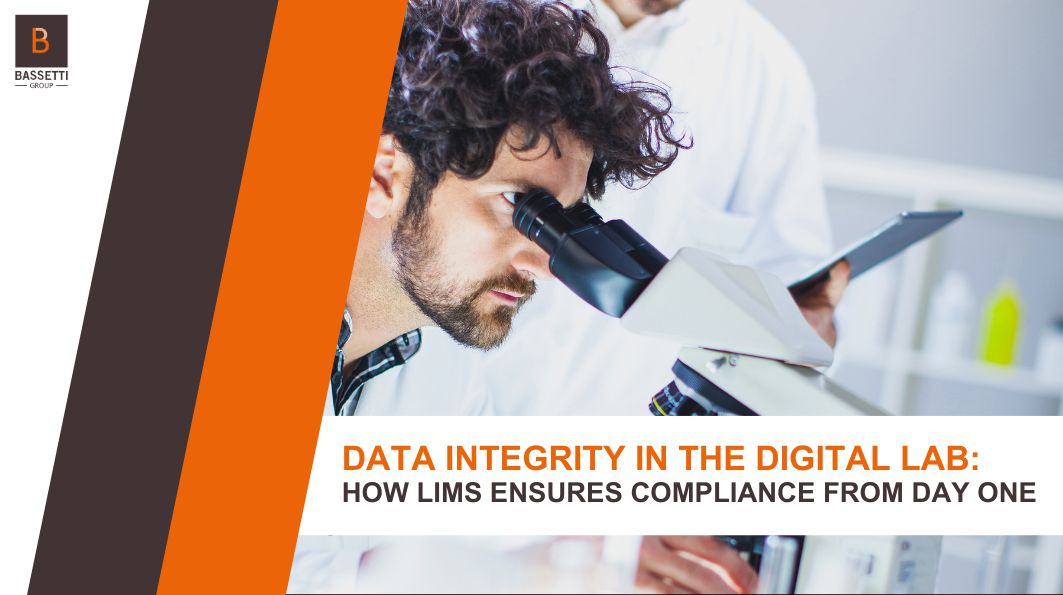
Data Integrity in the Digital Lab: How LIMS Ensures Compliance from Day One
From raw instrument readings to regulatory submissions, the integrity of your lab data determines the success of every experiment. Laboratories across the globe are under increasing scrutiny from regulatory bodies, including the FDA, ISO auditors, and industry-specific compliance authorities. Any lapse in data integrity can lead to failed audits, lost credibility, and costly delays in product development.
For laboratories advancing in digital transformation, a Laboratory Information Management System (LIMS) is no longer just a tool for sample tracking or workflow efficiency, it’s the backbone of data integrity and compliance from day one.
In this post, we’ll explore the critical role LIMS plays in enforcing data integrity, diving deep into ALCOA+ (aka ALCOA-CCEA) principles and regulatory frameworks like FDA 21 CFR Part 11 and ISO 17025:2017. By the end, you’ll see how LIMS not only protects your lab data but also strengthens your regulatory standing and operational efficiency.
Understanding Data Integrity in the Lab
Data integrity refers to the completeness, consistency, and accuracy of data throughout its lifecycle. In a lab setting, this doesn’t just mean numbers on a spreadsheet, it encompasses raw experimental data, instrument logs, sample metadata, and audit trails.
Regulatory authorities have become increasingly vigilant about data integrity because the consequences of errors or manipulation are significant. For example:
- FDA warning letters frequently cite data falsification or missing records.
- ISO 17025:2017 audits require traceable and verifiable records for every analytical procedure.
- Pharmaceutical and biotech labs rely on accurate data to ensure product safety and efficacy.
At the heart of modern compliance lies the ALCOA+ framework, a set of principles designed to ensure that data is trustworthy, reliable, and auditable.
ALCOA+: The Gold Standard for Laboratory Data
ALCOA+ is an evolution of the original ALCOA principles, providing a comprehensive framework for data integrity and governance. Each principle emphasizes a different aspect of trustworthy data:
1. Attributable:
Every piece of data must be traceable to the person who generated it. This ensures accountability and enables clear audit trails.
2. Legible:
Data must be readable and permanent, preventing misinterpretation or loss over time.
3. Contemporaneous:
Recording data in real time is critical. Retroactive entries or post-experiment modifications compromise integrity.
4. Original:
The raw data must be preserved as the authoritative record, even if summaries or reports are generated.
5. Accurate:
Data must be correct, precise, and reflective of the experiment or process performed.
6. + (Complete, Consistent, Enduring, Available):
These “plus” attributes emphasize that data must be comprehensive, follow consistent standards, be preserved for the required retention period, and remain accessible when needed.
While these principles are straightforward conceptually, implementing them consistently across a lab environment is challenging without the right tools.
How LIMS Automates ALCOA+ Compliance
A modern LIMS goes beyond sample tracking; it enforces data integrity automatically, aligning everyday laboratory operations with ALCOA+ principles:
1. Attributable:
LIMS requires user authentication and role-based access controls, ensuring that every action—sample entry, test execution, or data modification—is linked to a specific user. Unlike paper logs, where initials or signatures can be ambiguous, digital records are unambiguously attributable, providing a clear audit trail.
2. Legible:
Digital entry eliminates illegible handwriting or ambiguous notes. With LIMS, data is structured, searchable, and clearly formatted. Even handwritten annotations captured via digital devices can be stored in a standardized, legible format.
3. Contemporaneous:
LIMS enables real-time data capture from instruments and lab devices, ensuring that results are recorded as they are generated. Automated time stamping prevents backdating and strengthens compliance with contemporaneous recording requirements.
4. Original:
LIMS preserves raw instrument data alongside processed results, ensuring that the original dataset remains intact. Any subsequent analysis or reporting references the original dataset without overwriting it, maintaining the integrity of your records.
5. Accurate:
Built-in validation rules, automated calculations, and error checking reduce the risk of manual transcription errors. LIMS can flag out-of-range results or inconsistencies, prompting corrective action before data leaves the lab.
6. + Attributes
- Complete: LIMS can enforce mandatory fields and ensure that all relevant data points are captured.
- Consistent: Standard operating procedures and templates reduce variability in data entry.
- Enduring: Digital storage, redundancy, and backups protect against data loss.
- Available: Controlled access ensures that data can be retrieved efficiently during audits or investigations.
By embedding ALCOA+ into daily lab workflows, LIMS reduces human error, enforces regulatory requirements, and makes compliance a natural outcome rather than an afterthought.
FDA 21 CFR Part 11: Digital Compliance Made Simple
For laboratories under FDA oversight, 21 CFR Part 11 is a pivotal regulation. It governs electronic records and signatures, ensuring that digital data is equivalent to paper records in terms of reliability, authenticity, and traceability.
Key requirements of 21 CFR Part 11 include:
- Audit trails that track all changes to electronic records.
- System access controls to prevent unauthorized modifications.
- Electronic signatures that are unique to each user and legally binding.
- Validation of electronic systems to ensure accuracy, reliability, and consistent performance.
A compliant LIMS system addresses these requirements by design:
- Automated audit trails record who did what and when, providing a transparent, immutable history of data.
- Role-based permissions prevent unauthorized access or manipulation of records.
- Electronic signatures replace manual signatures, maintaining legal and regulatory validity.
- System validation ensures the LIMS performs correctly across all intended functions, reducing the risk of non-compliance during FDA inspections.
The result is data that is both trustworthy and audit-ready, significantly reducing regulatory risk and manual compliance effort.
ISO 17025:2017: Reinforcing Laboratory Credibility
For labs operating in testing, calibration, or analytical environments, ISO 17025:2017 is the international standard for competence and quality in testing laboratories. Compliance requires robust data integrity and traceability throughout laboratory operations.
LIMS supports ISO 17025:2017 compliance by:
- Standardizing workflows to reduce variability in data collection and reporting.
- Maintaining traceable records from sample receipt through final report generation.
- Ensuring measurement uncertainty documentation is preserved alongside raw data.
- Facilitating internal audits by making data searchable, exportable, and reviewable in seconds.
ISO 17025:2017 auditors increasingly expect digital readiness. A lab without a LIMS often struggles to provide evidence of complete, accurate, and traceable data, leading to extended audits and corrective action plans.
Lab Data Security: Protecting Integrity Beyond Compliance
While regulatory compliance is a strong motivator, lab data security is equally critical. Beyond meeting FDA or ISO standards, labs face threats from:
- Cyberattacks targeting proprietary research
- Internal data manipulation or accidental deletion
- Loss of intellectual property due to inadequate storage
A LIMS mitigates these risks by providing:
- Secure, encrypted data storage
- User authentication and permissions management
- Automated backups and disaster recovery protocols
- Immutable audit trails and version control
By combining regulatory compliance with robust security, LIMS ensures that your lab’s most valuable asset, its data, is protected at all times.
Beyond Compliance: Operational and Strategic Benefits
While LIMS enforces ALCOA+ and regulatory requirements, the benefits extend far beyond compliance:
- Efficiency gains: Automated workflows reduce repetitive manual tasks, freeing scientists to focus on research rather than paperwork.
- Error reduction: Digital validation and error checking prevent costly mistakes.
- Data-driven decision-making: With clean, reliable data, labs can confidently analyze trends, optimize processes, and improve quality outcomes.
- Audit readiness: Regulatory inspections are no longer stressful events; every record is organized, attributable, and easily retrievable.
In other words, LIMS transforms data integrity from a compliance checkbox into a strategic advantage, improving both operational performance and regulatory standing.
TEEXMA for LIMS: Strengthening Data Integrity from the Start
While many LIMS solutions promise compliance, TEEXMA for LIMS takes data integrity a step further by providing an integrated platform that connects your lab’s technical expertise, processes, and data in one secure environment. TEEXMA ensures that every piece of data captured in your lab is traceable, validated, and audit-ready, fully aligning with ALCOA+ principles.
Key features include:
- Automated compliance enforcement: TEEXMA integrates regulatory requirements like 21 CFR Part 11 and ISO 17025 directly into workflows, so compliance is maintained from day one.
- Centralized data management: All raw and processed data, instrument logs, and sample records are stored in a secure, accessible repository, ensuring originality and availability.
- Advanced audit trails: Every action in the system is recorded and attributed, making audits smoother and reducing regulatory risk.
- Error prevention and validation: Built-in validation rules and checks reduce manual entry mistakes, supporting accuracy and completeness in all laboratory records.
By using TEEXMA for LIMS, laboratories don’t just meet regulatory expectations, they elevate operational excellence and trust in every dataset, turning data integrity into a competitive advantage.
Conclusion: Data Integrity Starts with LIMS
In the modern laboratory, data integrity is non-negotiable, and achieving it manually is both risky and inefficient. By embracing a LIMS solution, labs can enforce ALCOA+ principles, maintain FDA 21 CFR Part 11 and ISO 17025 compliance, and secure their most valuable asset, the data itself.
From ensuring that every record is attributable, legible, and accurate, to automating audit trails and electronic signatures, LIMS turns regulatory requirements into seamless, everyday practice. Beyond compliance, it drives operational efficiency, reduces errors, and positions your lab for strategic growth.
In short, a LIMS doesn’t just safeguard your data—it safeguards your lab’s reputation, productivity, and future innovation potential. For labs navigating the digital transformation journey, investing in a LIMS is investing in integrity, compliance, and long-term success.