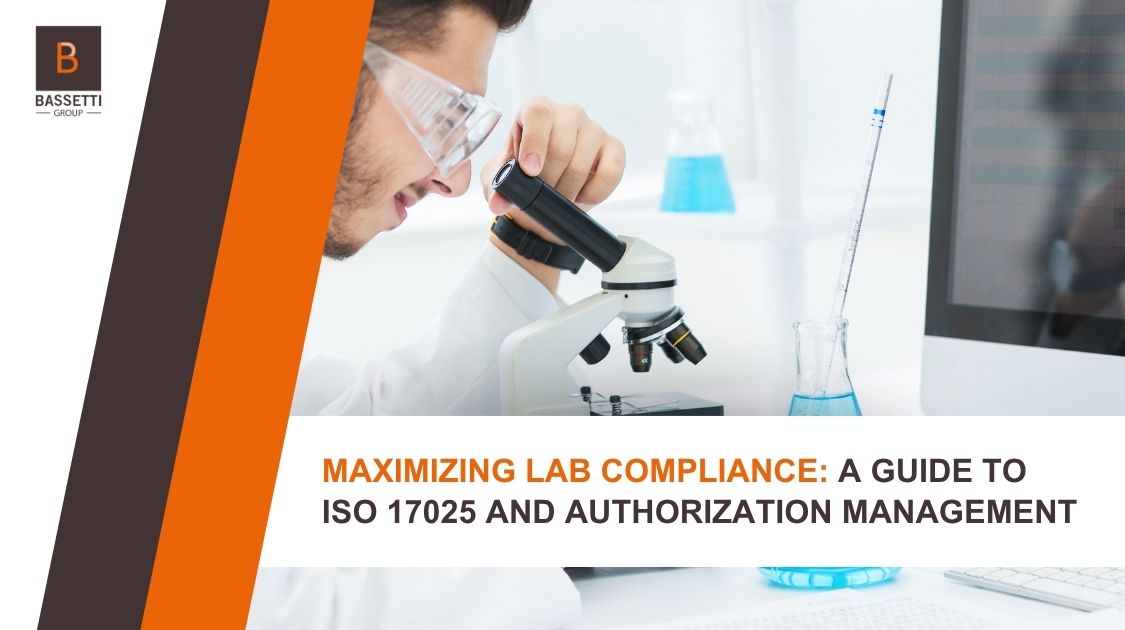
Maximizing Lab Compliance: A Guide to ISO 17025 and Authorization Management
In the high-stakes world of industrial and scientific laboratories, authorization management is a cornerstone of regulatory compliance and data integrity. Whether you are managing a quality control lab in the aerospace sector or a R&D facility in the pharmaceutical industry, the ability to prove that every technician is qualified, trained, and authorized is non-negotiable.
This article explores the rigorous regulatory landscape, specifically ISO 17025, and outlines how digital transformation through LIMS (Laboratory Information Management Systems) is redefining best practices for skill and competency tracking.
The Regulatory Foundation: Understanding ISO 17025 §6.2
For any laboratory seeking accreditation from bodies such as ANAB or A2LA in North America, or global equivalents, ISO 17025 is the definitive standard. In the 2017 revision, the standard transitioned from a focus on simple “Technical Competence” to a broader, more robust Personnel Management Framework under Section 6.2.
The shift was profound: the focus moved from merely having trained staff to maintaining a documented, continuous system of competence.
The Lifecycle of Competency Management
Under Section 6.2, a laboratory is required to manage the personnel lifecycle through a documented process that includes:
- Determining Competency Requirements: Before hiring or assigning, the lab must define what “competent” looks like for a specific role (e.g., “Must have a B.Sc. in Chemistry and 2 years of ICP-MS experience”).
- Selection and Training: Ensuring the right people are hired and that gaps in their knowledge are filled with structured, traceable training programs.
- Supervision: Personnel in training must be supervised. The standard is strict here. You must be able to prove who supervised the trainee and how they verified the work.
- Authorization: This is the formal green light. No one should perform laboratory activities, from operating equipment to signing reports, without a documented, nominal authorization.
- Monitoring Competence: This is the most common pitfall. How do you prove a technician is still competent two years after their initial training?
The “Monitoring” Mandate: Beyond the Annual Review
Section 6.2.5 specifically requires the laboratory to have procedures for monitoring competence. In a global, high-precision environment, watching them work once a year is no longer sufficient to satisfy modern auditors. Modern best practices suggest several data-driven monitoring methods:
- Blind Samples: Periodically giving a technician a known standard to test without their knowledge of the expected result.
- Intra-laboratory Comparisons: Having two technicians perform the same test on the same sample and comparing the Z-scores to ensure consistency.
- Review of Records: Systematic auditing of the raw data and reports produced by the individual to identify patterns of error or “drift” in technique.
Documenting the “Competence Six”
According to Clause 6.2.5, the laboratory must retain records for the following six areas for every person who influences lab results:
- Educational and Professional Qualifications: Diplomas and external certifications.
- Training: Internal “on-the-job” (OJT) training records.
- Competence: Evidence that the person can actually perform the task (test results, check-sheets).
- Authorization: The signed document granting the specific right to perform the task.
- Monitoring: The results of ongoing proficiency checks.
- Date of Authorization: A clear “effective date” to ensure no back-dating occurs.
Strategic Pillars of Laboratory Personnel Management
To remain compliant with these rigorous standards, laboratory management must ensure the competence of all staff who:
- Operate specific analytical equipment (e.g., XRD, Mass Spectrometers).
- Perform tests, calibrations, or samplings.
- Evaluate and interpret results.
- Review, authorize, and sign test reports and calibration certificates.
Examples of Critical Authorizations
Authorizations in a lab go far beyond a simple “login.” In an industrial context, they often include:
- Electrical Authorizations: For maintaining or operating high-voltage equipment.
- Chemical Safety & PPE: Authorization to handle hazardous substances or precursors.
- Controlled Environment Access: Validations for working in cleanrooms or biosafety level (BSL) labs.
- Pressure Vessel Operation: Certifications for autoclaves or high-pressure reactors.
- Security Clearances: Essential for defense-related industrial labs (e.g., Secret Defense).
Why Manual Tracking Fails Modern Labs
Historically, labs managed these six requirements via Excel spreadsheets or paper folders. However, in the era of Industry 4.0, these manual methods introduce significant risks:
- Version Control Issues: Presenting an outdated skills matrix during an unannounced audit.
- Human Error: Accidentally assigning an unauthorized technician to a critical calibration because the spreadsheet wasn’t updated.
- Lapse in Recertification: Missing the expiration date of a mandatory safety certification, leading to a major non-conformity.
The Role of LIMS as a Compliance Enforcement Engine
In high-regulation environments (FDA 21 CFR Part 11 or ISO 17025), a Laboratory Information Management System ensures quality is baked into the compliance workflow.
Preventative Workflow Controls
A LIMS creates a three-way validation link before a test can even begin. It checks the user (is their account active?), the method (are they authorized for this SOP?), and the instrument (are they certified on this specific equipment?). If any pillar is invalid, the system enforces a “Hard Stop,” preventing unauthorized data entry.
Digital Signatures and “Right to Sign”
The electronic record is the legal equivalent of paper. A LIMS automates electronic signatures, verifying that a manager has the documented authority to sign a Certificate of Analysis (COA) before the system allows a product release.
Automated Competency Triggers
By tracking every test a technician performs, a LIMS can identify skill decay. If a technician hasn’t performed a specific method in six months, the LIMS can automatically move their status to “requires supervision,” ensuring Clause 6.2.5 is handled by data rather than manual memory.
Implementation Best Practices for Global Markets
When developing your authorization management for a global market, consider the following:
- Incorporate ALCOA+ Principles: Ensure your digital authorization records meet the requirements of being Attributable, Legible, Contemporaneous, Original, and Accurate.
- Integration with HRIS and ERP: Integrating authorization data with HR systems ensures that when an employee leaves or changes roles, their lab access and signing rights are updated instantly.
- Focus on “Audit Readiness”: The goal is to be “always audit-ready.” Digital systems allow you to generate compliance reports at the click of a button, demonstrating to stakeholders that your lab operates with the highest level of integrity.
Securing the Future of Your Lab
Authorization management is the silent engine of laboratory quality. It protects your data, your reputation, and your personnel. By aligning with ISO 17025 standards and adopting a modular, scalable solution like TEEXMA, your laboratory can navigate the complexities of modern regulation with confidence.
Are you ready to digitalize your laboratory’s skills and authorizations? Our experts in data analysis and quality management are ready to help you transition to a more secure, automated, and compliant future.