
Material Behavior Modeling: Bridging the Gap Between Test Data and Simulation
From physical specimens to digital twins, the accuracy of any simulation depends entirely on a detailed understanding of how materials actually behave under stress. However, transforming terabytes of raw data from stress-strain, creep, fatigue, or tribology tests into reliable predictive models remains a major industrial challenge. Between the non-linearity of viscoelastic behavior and increasingly stringent certification requirements, many engineers struggle to guarantee the absolute accuracy of their calculations.
To bridge this gap, manufacturers must evolve beyond manual data management toward a structured “digital thread.” Discover how TEEXMA for Materials structures your test analysis, identifies precise material behavior laws, and secures your material fatigue predictions—transforming your raw experimental heritage into a high-performance lever for innovation.

Why Mastering Material Behavior is Now a Competitive Necessity
In cutting-edge sectors like aerospace and automotive, the pressure to design lighter structures is at an all-time high. However, lightweighting cannot happen at the expense of safety. This creates a delicate equation: engineers must now master material behavior across an extremely wide range of strain rates—from quasi-static loads to high-speed impacts.
It is no longer enough to rely on static “catalog” properties. Modern engineers must predict the dynamic response of matter under extreme loads (crash, perforation) and validate these choices long before the first physical prototype. Simulation is the arbiter of safety, but it is only as reliable as the material data feeding it.
The Challenge of Composite Materials
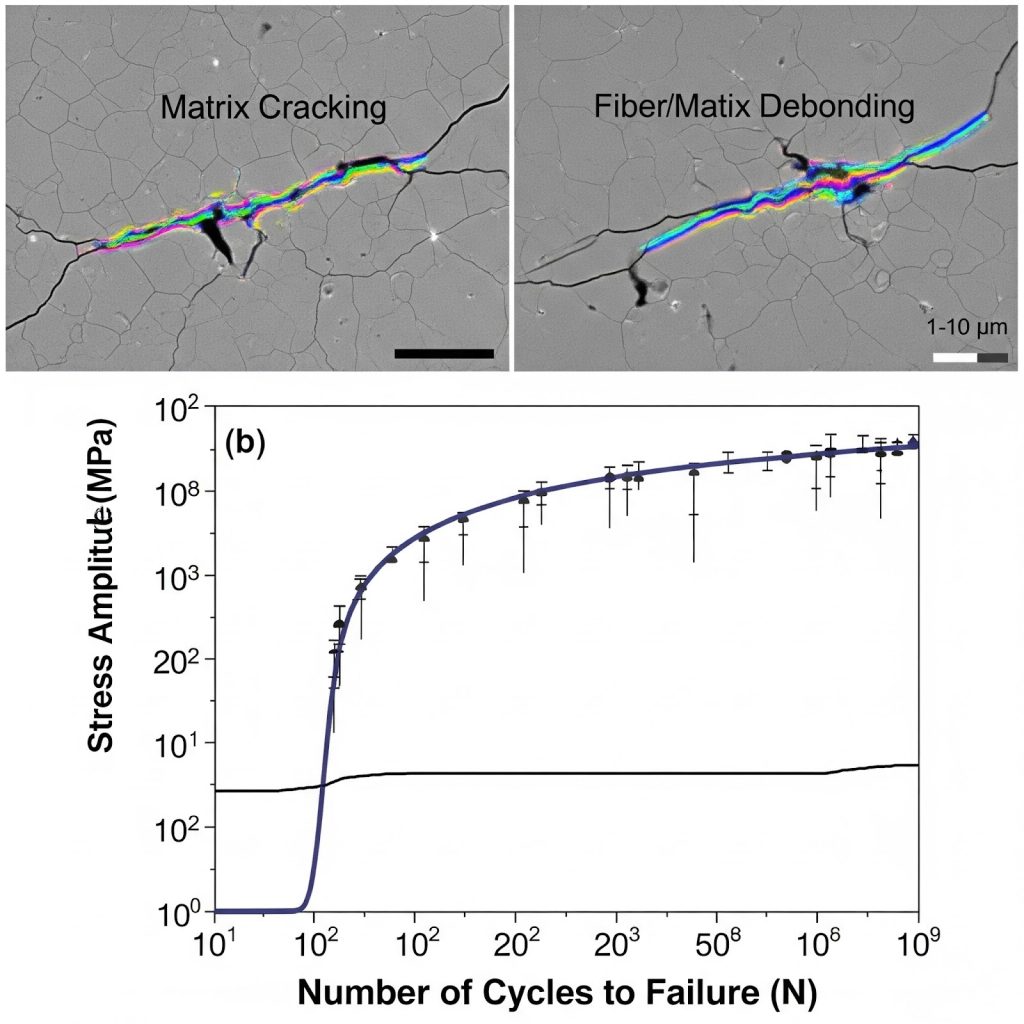
This complexity doubles when moving from isotropic metals to laminated composites. In these materials, failure is not a sudden event but a progressive damage process involving:
- Matrix micro-cracking
- Fiber/matrix debonding
- Coalescence of micro-defects
Without specialized material data management tools, this “material intelligence” remains hidden in disconnected spreadsheets, making it impossible to build a high-fidelity Digital Twin.
The Hidden Risks of Siloed Creep, Fatigue, and Impact Data
When tribology, aging, and dynamic data remain siloed, manufacturers are exposed to a fragmented view of physical reality. This creates a technological bottleneck in the development of critical parts like pressure vessels or suspension arms.
1. Analyzing Complex Damage Mechanisms
In material fatigue, relying solely on a standard Wöhler curve (S-N) is often insufficient. To describe progressive degradation accurately, an approach based on Damage Mechanics is essential. If your test data fails to capture the material’s anisotropy, your lifespan simulations risk missing the actual failure mode—exposing the manufacturer to significant reliability risks.
2. The “Temporal Headache” of Creep Data
Creep modeling—slow deformation under constant load—is highly sensitive to environmental factors like temperature and humidity. Faithful modeling requires distinguishing between:
- Short-term mechanisms: Diffusive movements and redistribution of internal stresses.
- Long-term mechanisms: Relative viscous sliding between solid surfaces.
Without a structured database to track these long, costly tests, engineers lose traceability, making it nearly impossible to correlate laboratory aging with real-world field performance.
3. The Strain Rate Wall: From Static to Crash
Material behavior changes radically depending on loading speed. Static tests cannot predict how a material absorbs energy during a shock. Ignoring this dynamic sensitivity leads to erroneous crash simulations that can derail an entire certification process.
How TEEXMA for Materials Optimizes Your Constitutive Laws
Faced with terabytes of experimental data, archiving Excel files is no longer a viable strategy. To transition from a test lab to a center of predictive expertise, you need a central hub to structure, analyze, and value your data.
Automating the Flow from Test to Material Card
TEEXMA for Materials eliminates data silos by centralizing:
- Scalar Values: Young’s modulus, mechanical limits, and Poisson’s ratio.
- Raw Curves: Traction, fatigue, hysteresis, and friction in tribology.
- Critical Metadata: Automated tracking of temperature, hygrometry, and test speed.
Identification and Correlation: The Heart of Performance
The true value of a material database lies in parameter identification. For granular or heterogeneous materials, macroscopic behavior depends on shape and distribution parameters that must be extracted and linked to mechanical properties.
Key features include:
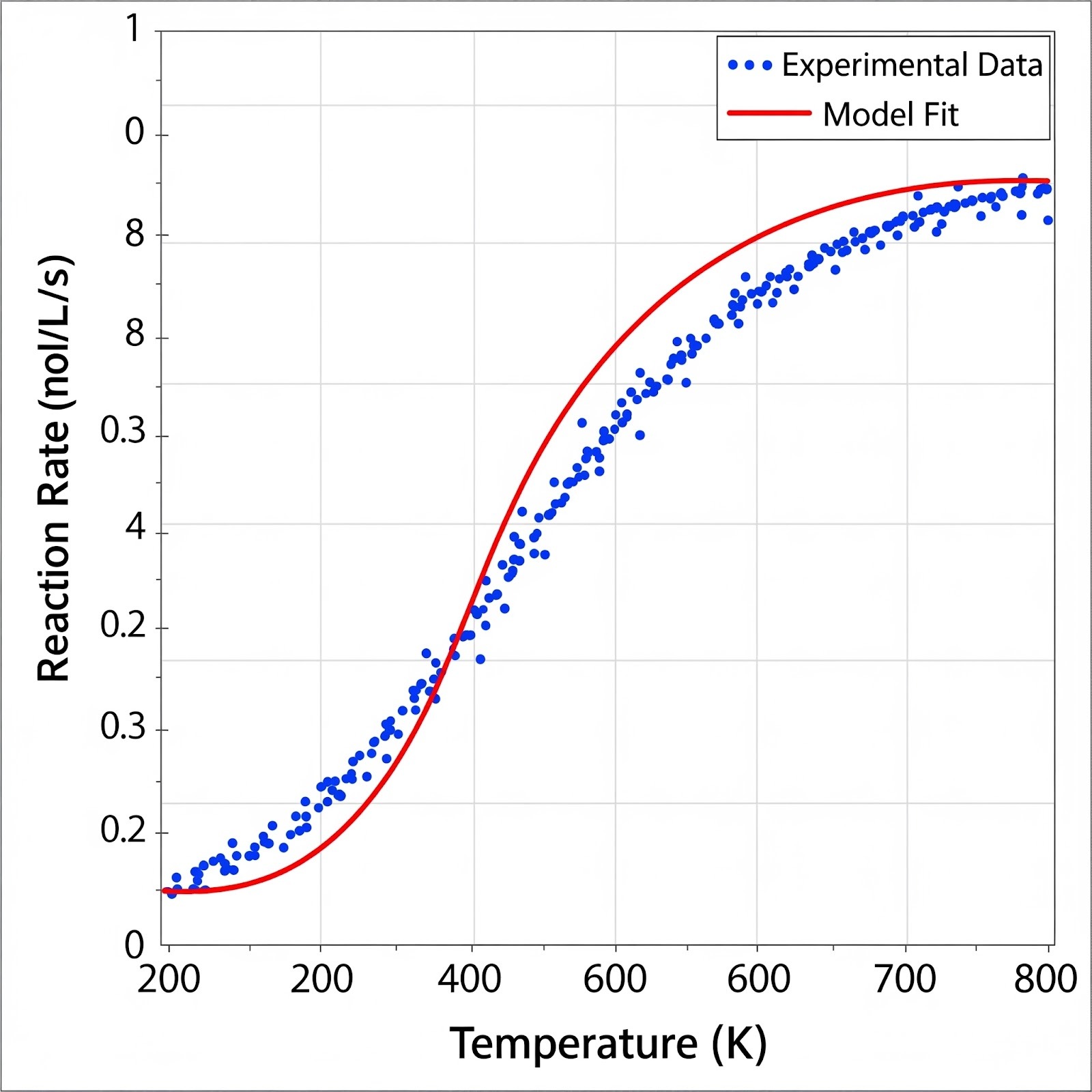
- Curve Fitting (Model Adjustment): Automatic identification of material constitutive laws (Paris law for fatigue, viscoelastic models for creep, etc.).
- Test-Calculation Correlation: Instant superposition of experimental curves and simulation results to validate the robustness of your solvers.
Beyond Storage: Preparing for AI and Machine Learning in Materials Science
As the industry moves toward Industry 4.0, the role of material data is shifting from a historical record to a predictive engine. The next frontier in engineering is the use of Artificial Intelligence (AI) and Machine Learning (ML) to predict material properties without performing every physical test. However, an AI model is only as good as the data it is trained on.
The Role of High-Quality Training Data
To leverage AI for materials discovery or to predict the lifespan of a part under complex fatigue, you need a “clean” dataset. Disconnected Excel sheets and PDF reports are “dark data”—unstructured and invisible to machine learning algorithms. By using TEEXMA for Materials, you transform this dark data into a structured, machine-readable format.
This structured heritage allows companies to:
- Train Surrogates Models: Create simplified numerical models that run in seconds rather than hours, accelerating the iterative design process.
- Predict Aging Phenomena: Use historical creep and humidity data to forecast how new alloys or polymers will behave after ten years in the field.
- Optimize Formulations: For chemical and composite manufacturers, correlating raw ingredient data with mechanical performance allows for the “inverse design” of materials tailored to specific stress requirements.
Standardizing the “Digital Thread”
The concept of the Digital Thread implies that material information flows seamlessly from the initial lab characterization to the design office, and finally to the manufacturing floor. When a material law is identified in the lab, it must be exported in a format that simulation solvers (like Abaqus, ANSYS, or Nastran) can interpret without manual entry errors.
By automating this “Digital Thread,” TEEXMA ensures that there is a single version of the truth. When a design engineer pulls a material card for a crash simulation, they are not just pulling a number; they are pulling a validated, traceable pedigree of the material’s behavior. This level of data integrity is what separates market leaders from those struggling with costly recalls and late-stage design failures.

Turn Your Material Data into an Economic Lever
Choosing a dedicated material management solution is an economic decision as much as a scientific one. Accurate modeling allows for:
- Reduced Safety Margins: Design thinner, lighter parts without compromising integrity.
- Lower Raw Material Consumption: Optimize material usage based on precise performance data.
- Preservation of Know-How: Test campaigns for creep and aging can take months. Centralizing this data prevents the need to repeat expensive tests when a researcher leaves or a file is misplaced.